
Event Management for Business Leaders: What It Really Involves and Why It Matters
Discover what professional event management really involves for senior business leaders, and why programme design matters more than logistics coordination.
· By Wesley Baker

Behind every seamless corporate conference, high-stakes product launch, or executive summit lies a discipline far more complex than most business leaders recognize. Event management is not simply about booking venues and coordinating catering; it is a strategic function that directly shapes brand perception, stakeholder relationships, and organizational outcomes.
Yet many executives still treat it as a logistical afterthought, delegating decisions without understanding the frameworks, risks, and variables involved. That disconnect carries real consequences, from budget overruns to reputational damage that can take years to repair.
This analysis is designed for business leaders who want to engage with event management at a deeper level. Whether you are overseeing an internal team, partnering with an agency, or evaluating your organization's events strategy, understanding what this discipline actually involves will sharpen your decision-making. We will examine the core components that drive event success, the critical points where leadership input matters most, and why companies that treat event management as a strategic priority consistently outperform those that do not. If you have ever wondered what separates a forgettable event from one that moves the needle, this is where that conversation begins.
What Event Management Actually Encompasses
Professional event management is, at its core, a discipline of interdependencies. Destination selection shapes the delegate experience before a single agenda item is confirmed. Venue procurement constrains or enables the programme design. Transport logistics determine arrival energy and departure impressions. Supplier management influences every touchpoint in between. Contingency planning holds the entire construct together when the unexpected occurs, as it invariably does. Understanding event management properly means recognising that each of these components is not a separate task to be assigned and ticked off; it is a variable that conditions every other variable in the system. A decision made during destination selection cascades directly into transport availability, accommodation choices, supplier networks and the practicality of the programme itself. The corporate events market reflects this complexity at scale, with professional segmentation spanning venue sourcing, planning and management, transport, programme design and technology integration as distinct but interrelated disciplines.
The global meetings and events market was valued at $1,245.8 billion in 2025, with corporate meetings holding the largest segment share at 34.2%. These are not abstract figures. They represent the commercial weight of an industry built on the premise that bringing people together, purposefully and well, creates outcomes that cannot be replicated through any other format. That premise is well established. What is less consistently understood, particularly among senior business leaders commissioning events for the first time or scaling their programmes, is the distinction between two fundamentally different approaches to delivering within that market.
The first approach is reactive logistics management: a client arrives with a decision already made, a destination selected, a date confirmed, and a set of requirements to be fulfilled. The provider executes. Venues are booked, delegates are registered, transfers are arranged. Done competently, this is operationally sound. But it is also, by definition, limited. The commercial purpose, the strategic alignment, the design of the experience itself, has already been determined elsewhere, often without specialist input.
The second approach is strategic programme design. Here, the brief is shaped before the decisions are made. The why is interrogated alongside the what. Who are the delegates, what do they need to think, feel and decide as a result of this experience, and how does the programme structure support that outcome? This is where genuine business value is built, and where end-to-end management through one accountable partner, rather than a collection of separately contracted suppliers, makes the most meaningful difference. At PURE ONE Business, this integrated, commercially grounded approach is the foundation of every programme we design.
The Business Case for In-Person Events in 2026
The post-pandemic return to in-person events is not a sentimental preference for how things used to be. It is a commercially grounded response to what organisations have learned about the conditions required for genuine strategic alignment. When 66% of marketers report that in-person events drove more revenue than virtual or hybrid alternatives in 2024, the conclusion is not that people simply enjoy being in the same room. It is that physical co-presence creates a qualitatively different environment for the conversations, decisions and relationship-building that produce lasting commercial outcomes. The reassertion of in-person is, at its core, a recognition that some forms of business value cannot be generated remotely.
At senior level, the structural limitations of video-based interaction become particularly consequential. Trust between executives, between leadership teams, between founders and their key stakeholders, forms through accumulated informal signal: the exchange before a session begins, the candid comment over dinner, the shared reaction to an unexpected moment. These are not trivial social gestures. They are the mechanism through which senior leaders assess reliability, calibrate confidence and establish the psychological safety required for genuinely candid strategic dialogue. A video call is optimised for information transfer; a carefully designed in-person programme is optimised for relationship formation. The two serve different functions, and organisations that conflate them routinely underinvest in the format that builds the foundations for long-term collaboration.
Hybrid formats deserve serious consideration, but they require a distinct strategic framing. The fact that roughly 70% of events now incorporate some hybrid element reflects genuine demand for accessibility and content reach, not evidence that hybrid replicates the in-person experience. For the right objectives, hybrid is an effective and appropriate choice: broadcasting to a distributed workforce, extending conference content to members who cannot travel, or maintaining connection across international teams between face-to-face programmes. What hybrid cannot do is replicate the conditions for informal contact, shared context and the kind of focused group attention that produces strategic clarity. Treating hybrid as a cost-reduced substitute for in-person programmes is a design error with measurable consequences for cohesion and alignment.
The commercial case for in-person investment has sharpened considerably. Organisations are increasingly connecting their event programmes directly to pipeline, retention and cultural outcomes measured over months rather than days, with some event leaders now working to pipeline targets evaluated 180 days post-programme. Team cohesion built through a distinctive shared experience does not expire at the end of a conference day. It compounds into the working relationships, cultural habits and institutional commitment that sustain performance through difficult quarters and leadership transitions. When in-person programmes are designed with genuine commercial intent, they function as strategic instruments, not administrative line items. Booking.com's corporate event research reinforces this consistently, with delegate engagement and relationship outcomes cited repeatedly as primary drivers of event investment at organisational level.
The 2026 planning environment warrants honest appraisal. Approximately 57% of event professionals anticipate favourable conditions in the year ahead, and the broader market trajectory supports that cautious optimism. However, geopolitical complexity, shifting political factors in key destination markets and evolving corporate travel policies are active considerations that require experienced navigation rather than avoidance. Destination and venue selection now carries reputational and operational weight that organisations cannot afford to treat as secondary logistics. Stakeholders at every level are asking whether a chosen location and format genuinely aligns with their values and risk profile. Getting that assessment right, consistently and at pace, is one of the most tangible contributions an experienced specialist partner such as PURE ONE Business brings to the planning process.
The 2026 Planning Environment: Complexity and Confidence
The mood among event professionals entering 2026 is best described as cautiously optimistic, but that optimism is doing real work against a backdrop of genuine complexity. Skift Meetings 2026 data indicates that 57% of event professionals anticipate favourable conditions over the next twelve months, and 53% expect neutral or positive budget trajectories. These are encouraging figures, but they sit alongside equally significant pressures: rising operational costs, talent shortages, increased political polarisation and the logistical unpredictability that has become a structural feature of global travel and events rather than a temporary disruption. The picture, in other words, is not simply bright or dark. It is genuinely mixed, and that mixture demands a more considered approach to programme planning than either confident expansion or cautious deferral.
The specific headwinds facing senior leaders and their planning teams in 2026 are well-documented. Geopolitical uncertainty has extended decision-making cycles and introduced hesitation around certain international destination markets. Political instability in parts of Europe and ongoing tensions affecting transatlantic trade and travel sentiment have shifted group travel patterns in ways that are still evolving. For British organisations in particular, post-Brexit logistics remain a practical layer of complexity when moving delegations across European borders. Supply chain unpredictability affects everything from production and staging to accommodation availability and ground transport at key periods. These are not abstract concerns; they translate directly into programme risk when planning is poorly structured or partner relationships are insufficiently robust.
The critical strategic insight here is that complexity is a reason to engage experienced specialist support, not a reason to delay. Organisations that pause event investment during periods of uncertainty rarely find that the pause costs them nothing. Relationship capital, team cohesion and the cultural continuity that well-designed shared experiences sustain are genuinely difficult to rebuild once lost. The Events Industry Council's 2026 Global Economic Significance report reinforces how fundamental business events are to commercial activity, noting that 1.65 billion participants gathered at business events in 2025, generating US$1.3 trillion in direct spending. Events, at this scale, are not discretionary; they are infrastructure.
For British organisations, the European context adds a further layer of strategic opportunity. Europe remains an active and growing event management market, and the UK sits at its centre as both a compelling domestic programme destination and a natural point of departure for continental travel. Carefully selected destinations across Spain, Italy, France and beyond remain highly accessible, and British organisations are well-positioned to build distinctive programmes without overextending on logistics or budget.
The long-term growth horizon for the sector provides additional context for strategic investment decisions. The global meetings and events market is forecast to grow from $1,245.8 billion in 2025 to $2,187.4 billion by 2034, representing a compound annual growth rate of 6.4% across a full decade. Organisations that build effective event programmes now are not responding to a trend; they are positioning themselves within a sustained, commercially significant expansion cycle. The question for senior leaders is not whether to invest in well-managed event programmes, but how to do so with the right expertise alongside them.
What Separates a Well-Managed Programme from a Well-Organised Event
The distinction between a well-organised event and a well-managed programme is not merely a question of scale or sophistication. It is a question of origin. A well-organised event starts with a plan and executes it correctly. A well-managed programme starts with a commercial objective and works backwards through every subsequent decision: the experience design, the destination choice, the delegate journey, and the criteria by which success will ultimately be judged. This reverse-engineering logic is the analytical core that separates transactional event coordination from genuine programme management, and understanding it matters considerably for any organisation investing in high-stakes business experiences.
Objective-setting as the foundation
Serious programme management begins before any venue is sourced or destination considered. It begins with a precise understanding of what the programme is designed to achieve, for whom, and how that achievement will be assessed. These are not administrative questions. They are commercial ones. Is the programme designed to advance a leadership team's strategic alignment? To reward and retain high performers? To deepen relationships with key clients or members? Each objective implies a different experience architecture, a different delegate journey, and a different set of success metrics. Without this clarity established at the outset, even a flawlessly executed event risks delivering something that looks impressive but produces no measurable commercial return. Strategic event management frameworks that connect programme design to organisational goals consistently outperform those that treat events as standalone productions.
Destination as a strategic variable
Destination selection is where the gap between coordination and programme management becomes most visible. Approached as a preference exercise or a default reward, destination becomes wallpaper; approached strategically, it becomes the first message a programme sends to its delegates. The environment in which people are placed primes their behaviour, their receptiveness, and their sense of what the occasion means. A leadership retreat held in a setting that communicates seriousness, space and intention will generate a different quality of thinking than one held in a familiar, functional venue that signals routine. This is not aesthetic preference; it is programme design. The destination choice should be driven by the commercial objective, not arrived at after all other decisions have been made.
Supplier accountability versus instruction-passing
There is a meaningful operational difference between a programme partner who manages supplier standards on your behalf and a coordinator who passes instructions through a chain and absorbs no accountability for the outcome. In the latter model, responsibility becomes diffuse. When a supplier underperforms, the coordinator reports the problem rather than resolves it. The delegate experience bears the consequences. A genuine programme management partner, by contrast, holds direct relationships with carefully selected suppliers, sets quality expectations from the outset, and takes personal accountability for the standards delivered. As IBTM World's project management guidance notes, the complexity behind a well-run event must remain entirely invisible to attendees. That invisibility is only possible when accountability sits clearly with the programme manager, not distributed across a supplier network.
Contingency architecture, not contingency checklists
Experienced programme managers do not simply document what might go wrong. They design programmes so that disruption, when it occurs, is resolved at the management layer before delegates are ever aware of it. This is the difference between a contingency checklist and contingency architecture. A checklist is reactive; it records known risks and assigns responses. Architecture is proactive; it anticipates failure modes, builds resolution pathways into the programme structure, and ensures that the commercial purpose of the event is protected regardless of what changes in the field. As certified event professionals acknowledge, vendors cancel, conditions shift, and technology fails; the manager's responsibility is to adapt without the disruption becoming part of the delegate's experience. This capability is not developed through process documents. It is built through accumulated experience across many programmes, many destinations and many variables that could not have been predicted in advance. It is, ultimately, what clients are paying for when they engage a specialist rather than a coordinator.
Types of Business Event Programmes and Their Distinct Objectives
Executive Retreats and Leadership Off-Sites
The executive retreat occupies a specific and important position in the business events landscape. Its purpose is not to deliver a polished presentation or celebrate a milestone; it is to create the conditions in which senior leaders can think clearly, speak honestly and make consequential decisions together. That distinction shapes every element of the programme, from the destination chosen to the ratio of structured sessions to unscheduled time.
Destination selection for leadership off-sites carries more strategic weight than it might appear. Environments that offer genuine remove from the working day, whether a historic country estate in Scotland, a hillside property in Tuscany or a privately arranged venue in the French countryside, allow participants to shift mentally out of operational mode. The location itself does part of the facilitator's work. What distinguishes a well-designed executive retreat is the balance struck between structured agenda and open space. Too rigid a programme reproduces the meeting culture the retreat was designed to escape; too loose and the gathering lacks the productive tension that generates real decisions. Getting this balance right is a matter of programme design expertise, not simply good scheduling.
Incentive Travel Programmes
Incentive travel is recognised across the global industry as a professionally and commercially distinct category, and it is worth being precise about why. The objective is not to give high performers a pleasant trip; it is to sustain motivation, reinforce organisational culture and demonstrate, in a tangible and memorable way, that performance is genuinely valued. According to industry research on meeting and incentive travel, 55% of senior leaders now consider incentive travel essential to company success, with average global programme spend running at approximately $5,100 per person.
What separates a well-designed incentive from a straightforward group trip is intentionality at every stage. Destination selection should be driven by the behaviour the programme is recognising. A high-energy sales celebration calls for very different design logic than a senior loyalty programme where discretion, service standards and ease of movement are paramount. The quality of the experience, its exclusivity, its thoughtfulness and its coherence as a narrative, is what carries the motivational message. These are not details; they are the programme's core substance.
Conferences and Structured Business Meetings
Conferences and structured business meetings represent the commercial core of the global meetings and events market, holding a 34.2% share of the market by segment in 2025. This category is broad, spanning large-scale annual conferences through to focused senior leadership gatherings of 20 to 30 delegates. What unites them is that the agenda is itself the product. Delegate experience thinking, speaker management, session architecture and the careful sequencing of content and networking opportunity are all essential design disciplines, not logistical afterthoughts.
Team Experiences and Development Programmes
Team experiences and development programmes are frequently mischaracterised as team-building days or social events with a vague developmental purpose. In practice, a well-designed programme of this kind has clear design intent and measurable outcomes. The objective might be to build cohesion within a newly formed leadership group, to develop commercial capability across a growing team, or to strengthen relationships between functions that rarely work closely together. The design logic differs significantly from a social programme, and the choice of destination, activity and facilitation format should all serve that intent directly.
Hosted Business Experiences for Membership Organisations
For membership organisations and professional communities, the business event is not a supplement to the value proposition; it is the value proposition. Ourisman Travel's analysis of corporate retreat and incentive programme design illustrates how the calibre of the hosted experience shapes perception of the organising body itself. When members attend a hosted programme, they are evaluating not only the content but the organisation's judgement, taste and understanding of what its community genuinely values. A poorly conceived programme does reputational damage that no amount of follow-up communication can fully repair. Conversely, a carefully curated, well-managed hosted experience becomes a retention and recruitment tool in its own right. This is a commercially significant programme category that deserves the same rigour applied to any other strategic investment.
How to Choose the Right Event Management Partner
Selecting an event management partner is a consequential decision, and the sheer volume of providers operating in this space makes careful evaluation essential. The criteria that matter most are not always the most visible ones. A compelling website and a broad client list are easy to present; genuine sector depth, international knowledge and end-to-end accountability are harder to verify and far more important to get right.
Specialist Experience in Your Programme Type
Generic event coordination capability is not the same as specialist expertise in executive retreats, incentive travel or hosted leadership experiences. These are distinct disciplines with their own rhythms, expectations and risk profiles, and a partner who has managed large-scale conference logistics may have limited understanding of what makes a senior leadership retreat genuinely effective. When evaluating any partner, ask specifically for evidence of experience in the programme type you are planning. Request case studies rather than client names, and explore the specifics: how did they approach the agenda design? What was the group size and seniority profile? How did they handle challenges during delivery? The answers will quickly reveal whether their experience is substantive or surface-level.
Destination Knowledge and International Reach
For UK-based organisations, a credible partner should hold genuine advisory capability across British venues and destinations alongside key continental European markets. Italy, Spain and France each offer distinctive programme environments, but choosing the right destination for your event requires more than access to availability. It requires an understanding of how seasonal conditions, local infrastructure, attendee logistics and destination character interact with programme objectives. A partner who can only book what is available through their existing supplier network is offering a different service to one who can advise strategically on destination selection and make a well-reasoned case for their recommendation.
Single-Point Accountability vs. Brokerage
A question worth asking directly is whether your named contact will hold genuine accountability for every component of the programme, or whether elements will be passed to third-party coordinators once contracted. End-to-end management through a single point of accountability reduces coordination failures, eliminates the cost surprises that emerge when components are managed in silos, and ensures consistent quality throughout the delegate experience. Organisations should be clear about what they are purchasing before any agreement is signed.
Planning Process as a Signal of Strategic Capability
The quality of a partner's initial questions tells you more about their capability than any proposal they subsequently produce. A partner who moves quickly to recommending destinations and formats before fully understanding your objectives is optimising for their own efficiency, not your outcomes. Effective programme design begins with a rigorous briefing process: understanding the business context, the audience, the desired outcomes and any sensitivities that shape what will and will not work. Reviewing event statistics shaping the industry in 2026 reinforces that experiential engagement is now a primary corporate investment driver, which makes objective-led planning more important than ever.
Sustainability and Responsible Programme Design
Within the European event management market, sustainability credentials are becoming a meaningful evaluation criterion, particularly for organisations with environmental reporting commitments. A partner who can advise on proximity-based destination selection, responsible supplier practices and programme design that reduces unnecessary travel adds tangible value beyond logistics management. For organisations that need to account for carbon impact internally, a partner who cannot engage with this dimension of planning represents a practical gap. Responsible programme design is not simply an ethical consideration; for many organisations it is becoming a governance one.
PURE ONE Business brings more than four decades of travel and events experience to each of these evaluation criteria. If you are assessing your options for an upcoming programme, we would welcome the opportunity to talk through what you are planning and how we might help.
Getting the Most from Your Event Investment
The returns from a well-designed business event programme extend well beyond the event itself, yet many organisations still struggle to articulate them with any precision. This is not because the returns are absent; it is because they are rarely planned for. Team retention, performance uplift, strategic alignment, relationship depth and cultural reinforcement are all legitimate outcomes of professionally designed programmes, but they do not emerge by accident. They result from intentional design, clear objectives set before a venue is ever shortlisted, and a commitment to measuring what matters after delegates return to their desks.
A strong brief at senior level looks quite different from a standard event-planning document. It begins with commercial objectives stated plainly: what decision, shift or outcome does the organisation need this programme to produce? It includes an honest assessment of the audience, not just their job titles, but their current state, the pressures they are carrying, the relationships that need strengthening and the dynamics that need addressing. It defines success criteria that go beyond attendance and satisfaction scores. Crucially, it articulates what the programme needs to feel like, not just what it needs to include. The difference between a list of sessions and a genuinely well-crafted experience lies in that distinction.
Post-event evaluation is where too many programmes fall short. Satisfaction surveys have their place, but they rarely capture the more significant question: did the commitments and decisions surfaced during the programme translate into sustained action? A partner with real commercial experience can help leadership teams bridge that gap, supporting the follow-through process and ensuring that the momentum built during an intensive in-person programme is not lost within a fortnight of returning to normal operations.
Technology is increasingly useful as a planning support tool. AI-assisted logistics, delegate communications and data analytics can improve efficiency at scale, and the smarter platforms are integrating these capabilities meaningfully. However, in high-stakes leadership and incentive contexts, where the experience must be genuinely distinctive and the relationships at stake are commercially significant, human expertise and relationship-based programme management retain irreplaceable value. Judgement, creative design and the ability to read a room cannot be templated.
The organisations that compound the greatest returns from their event programmes are those that treat them as a recurring strategic investment rather than an intermittent necessity. Each well-executed programme builds on the last, deepening trust, reinforcing culture and improving the quality of the conversations that follow. According to the Events Industry Council's 2026 research, business events globally generated US$1.3 trillion in direct spending in 2025, representing a 12.2% increase over pre-pandemic levels. That sustained organisational commitment reflects a collective understanding that in-person programmes produce returns worth protecting. The task for any leadership team is to move from that instinctive understanding to deliberate, measurable programme strategy.
If you would like to explore how PURE ONE Business approaches programme design with that level of commercial intention, we would welcome a conversation.
The Strategic Value of Getting Event Management Right
The case made throughout this analysis returns, ultimately, to a single conclusion: event management at leadership level is a commercially significant discipline, and the organisations that treat it as such consistently see better returns on every pound invested. The difference between a well-organised event and a well-managed programme is not cosmetic. It is visible in whether relationships deepen, whether strategic conversations happen, whether teams return with renewed purpose, and whether the investment can be justified in terms a board or senior leadership team would recognise.
Three conditions determine whether a programme delivers lasting value. The first is clarity of commercial objectives from the outset; without defined outcomes tied to organisational goals, measuring event ROI becomes guesswork and the event loses its strategic anchor. The second is end-to-end management by a partner who carries accountability across the full programme arc, from initial design through to post-event reflection, not simply a supplier who coordinates logistics on the day. The third is genuine attention to the experience of every person involved; as value-driven event strategies make clear, the face-to-face connections that build loyalty and trust are produced by deliberate design, not by circumstance.
If you are planning a programme for a founding team, a leadership group, or a membership community and want to discuss how purposeful programme design actually works in practice, the team at PURE ONE Business would welcome the conversation.
Explore more
About the author
Wesley Baker
Wesley Baker is the Founder and CEO of PURE ONE Group and a travel-industry entrepreneur with more than four decades of experience building and leading businesses across travel, technology and media. Through PURE ONE Business, he helps organisations create distinctive executive retreats, business experiences, meetings, incentives, conferences and events across the UK, Europe and selected international destinations. He is also a bestselling author and regular podcaster.
Related articles
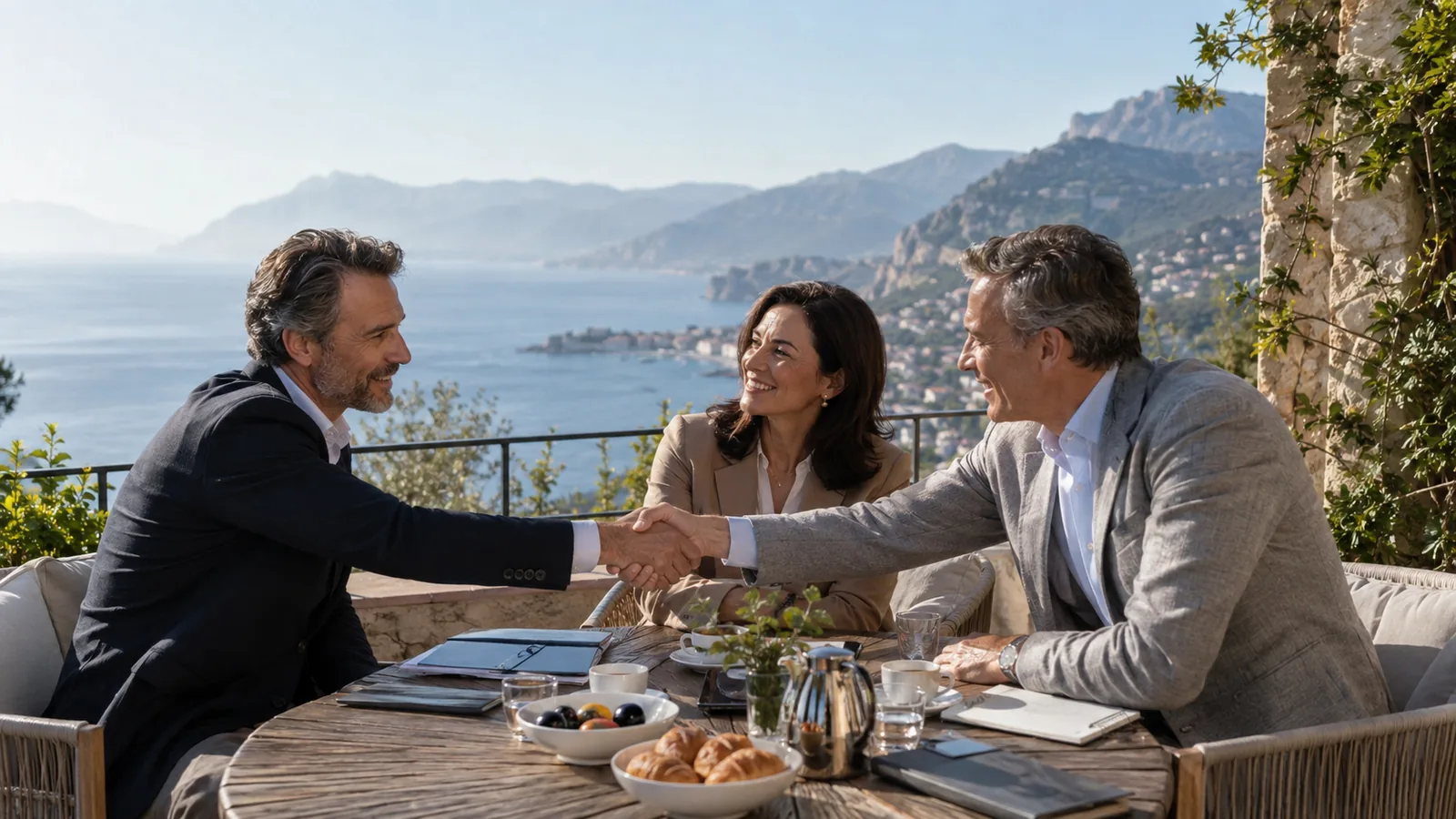
Leadership retreats ·
The New Boardroom Has a View: Why High-Quality Retreats Matter More Than Ever
Why the most valuable business conversations increasingly happen away from the office, and what separates a genuinely high-quality executive retreat from an away day.
By Wesley Baker
Read article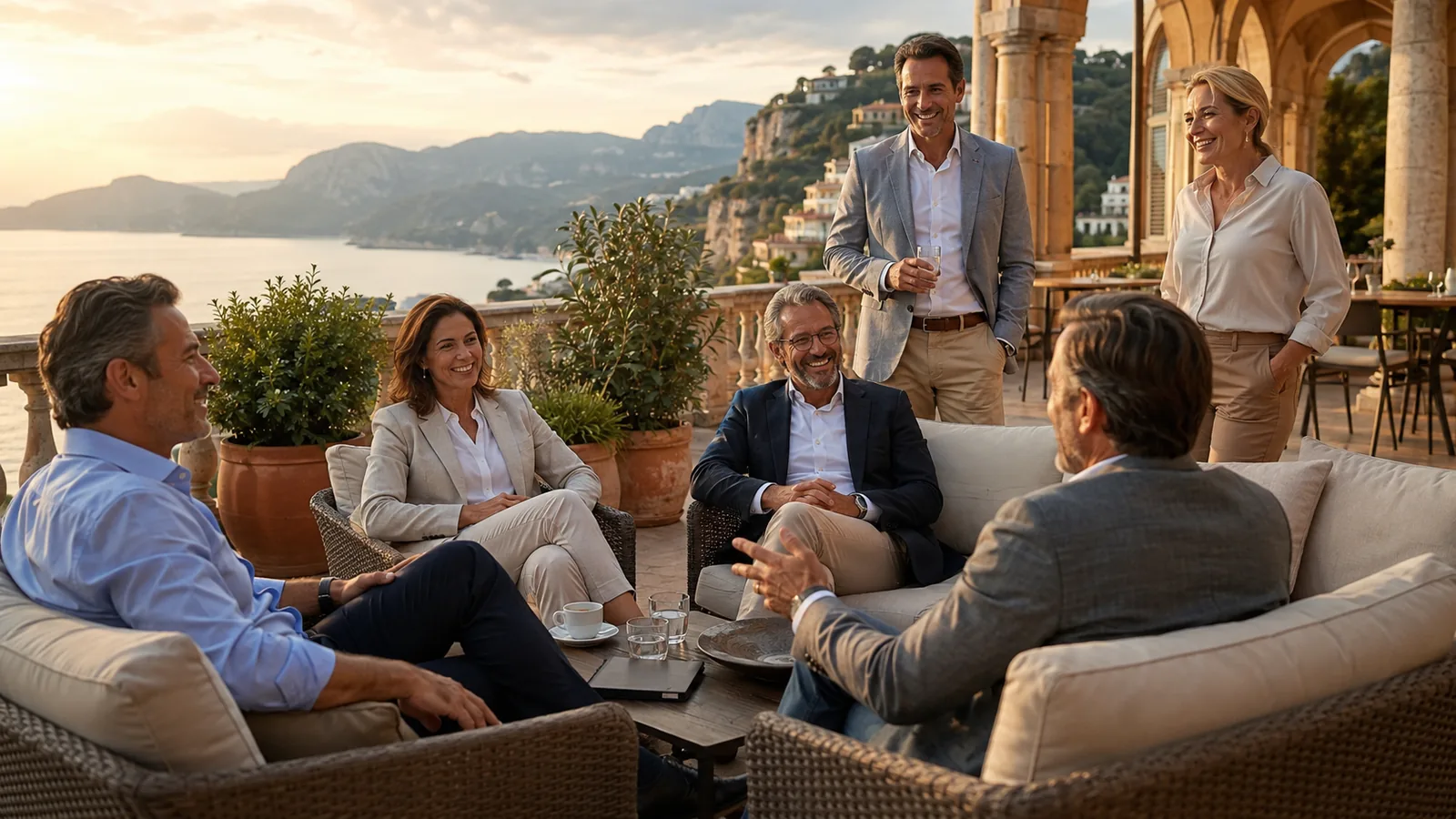
Leadership retreats ·
Executive Retreats Built by Business People, for Business People
Why PURE ONE Business designs executive retreats, leadership experiences and business networking events from a commercial perspective, for CEOs, CFOs, COOs, CMOs, founders and leadership teams.
By Wesley Baker
Read article
Destination intelligence ·
The In-Demand Retreat Destinations for 2027: Spain, Italy and the Balearics
Where business groups are heading in 2027: Spain, Italy and the Balearic Islands lead demand, with Portugal, Greece, Croatia and Morocco close behind.
By Wesley Baker
Read article