
Why Choosing the Right Destination Decides the Success of Your Retreat
Destination choice makes or breaks a corporate retreat. How to judge accommodation, resorts and logistics properly - and why first-hand knowledge matters.
· By Wesley Baker
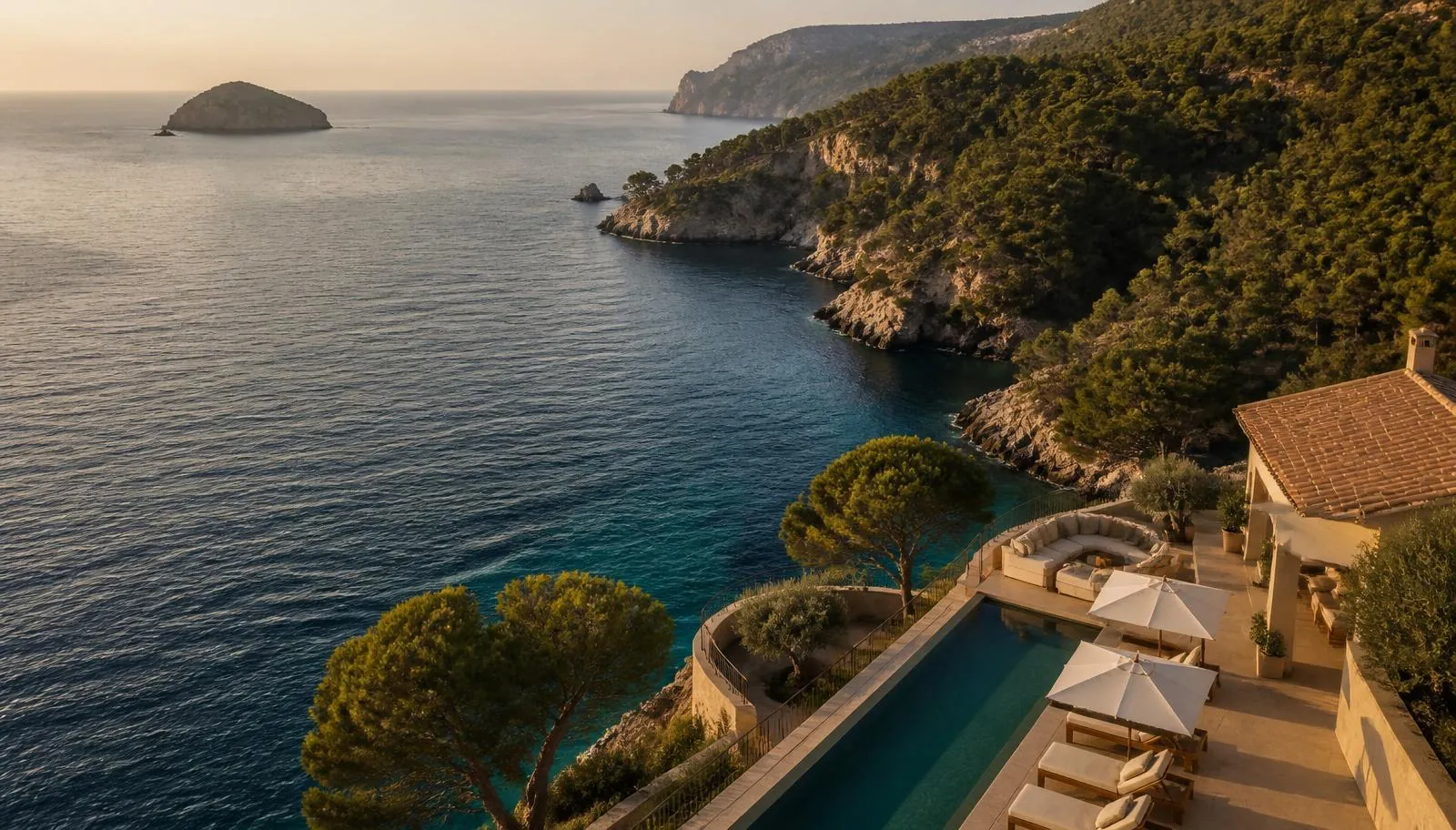
Every retreat brief eventually arrives at the same question: where should we go? It is usually treated as the fun part of the process, decided from a shortlist of attractive photographs. In practice, destination choice is the single decision that shapes everything that follows - the mood of the group, the quality of the thinking, the cost of the programme and the amount of firefighting required on the ground.
Get it right and the setting does half the work for you. People arrive relaxed, conversation opens up, and the programme runs without friction. Get it wrong and no amount of clever agenda design will rescue the week.
Start with the outcome, not the location
A board that needs three days of undisturbed strategic thinking wants seclusion, privacy and very few distractions. A sales incentive rewarding a strong year wants energy, atmosphere and a destination people will talk about for months. A client hosting programme needs a place that reflects the standing of your business and gives you natural moments to build relationships. Those are three different destinations, and the brief should decide which one you are looking for before anybody opens a brochure.
The factors that quietly decide everything
When we assess a destination for a corporate group, we are looking at a short list of practical realities:
Access for the whole group. Direct flights, sensible arrival times and a transfer that does not eat half a day. Senior people will forgive a lot, but not a four-hour coach journey after a delayed flight.
Privacy and control. Exclusive use, or a property quiet enough to feel exclusive. Sharing a terrace with a family holiday market changes the tone of a leadership discussion immediately.
Rooms that are genuinely equivalent. Where hierarchy shows up in the bedroom allocation, it shows up in the room where you are trying to get honest conversation.
Working space that works. Natural light, air conditioning that can be heard over a discussion, shade outdoors, reliable connectivity and a room that is not the hotel basement.
Seasonality. The same resort can be perfect in May and unworkable in August. Heat, wind, cruise traffic, local holidays and staff turnover all move through the calendar.
Food and service pace. A kitchen that can serve forty covers to time is a different operation to one that can serve four hundred slowly.
Why first-hand knowledge is not a luxury
None of the points above can be verified from a website. Photography is commissioned to flatter, floor plans do not carry sound, and online reviews describe a leisure guest's experience rather than a working group's. The only reliable way to know a property is to stay in it, eat in it, walk the transfer route and watch how the team performs when something goes wrong.
That is the standard we hold ourselves to. We recommend accommodation and resorts we have visited personally, met the management of, and tested against the demands of a business group. It means we can tell you which villa suits a board of twelve and which suits a wider offsite, which hotel handles a private dinner beautifully and which one will feel like a conference centre, and where the quiet corner is when two people need ten minutes on their own.
It also means we say no. Turning down a property that photographs well but performs badly saves a client far more than any negotiated rate.
The commercial case
A well-chosen destination is usually the cheaper option, not the more expensive one. Short transfers cut coach hours. The right room count avoids paying for space you cannot use. Good local suppliers reduce the need to import everything. And a group that arrives easily gives you a productive first evening rather than a lost one.
The reverse is equally true. Most retreat budgets are damaged not by the headline rate but by the corrections - late room upgrades, extra transport, a hired meeting space because the hotel room was unusable, and the hours your own team spends managing problems that should never have existed.
Where to begin
Write down the outcome you need, the size of the group, the time of year and the maximum acceptable travel time. Those four lines will remove most of the world and leave you with a shortlist worth investigating properly. From there, work with people who know the properties rather than the search results.
If you are weighing up destinations for a retreat or business experience, share your brief with us and we will come back with options we know first-hand. For a fuller specification, use the detailed retreat request, or look at the retreats you can already join to see how we put a destination to work.
Frequently asked questions
- How do you choose a destination for a corporate retreat?
- Start with the outcome you need, then filter destinations by travel time and access for the whole group, exclusive-use or near-exclusive accommodation, indoor and outdoor meeting space, seasonality, and the quality of local suppliers. Only then compare cost. A destination that fails on access or privacy will undermine the programme regardless of how good it looks.
- Why does visiting a venue in person matter?
- Photographs and floor plans do not show noise, walking distances, lift capacity, service pace, shade, wind, mobile signal or how a meeting room feels at three in the afternoon. We inspect the accommodation and resorts we recommend so those realities are known before a group arrives, not discovered on day one.
- How far in advance should a destination be confirmed?
- For a retreat of any scale, most organisations confirm the destination and accommodation 18 to 24 months ahead. Exclusive-use properties and the best weeks of the season are taken early, so late decisions usually mean compromise.
- Destinations
- Executive Retreats
Explore more
About the author
Wesley Baker
Wesley Baker is the Founder and CEO of PURE ONE Group and a travel-industry entrepreneur with more than four decades of experience building and leading businesses across travel, technology and media. Through PURE ONE Business, he helps organisations create distinctive executive retreats, business experiences, meetings, incentives, conferences and events across the UK, Europe and selected international destinations. He is also a bestselling author and regular podcaster.
Related articles
Destination intelligence ·
The In-Demand Retreat Destinations for 2027: Spain, Italy and the Balearics
Where business groups are heading in 2027: Spain, Italy and the Balearic Islands lead demand, with Portugal, Greece, Croatia and Morocco close behind.
By Wesley Baker
Read article
Event management ·
The Best Business Events Begin Long Before Anyone Arrives
Why early business event planning creates better venue choices, clearer budgets and meaningful human connections, with insight from Wesley Baker.
By Wesley Baker
Read article
Destinations ·
Why Italy Should Be the Next Destination for Your Business Retreat
From Tuscany and Lake Como to Rome, the Amalfi Coast and the Italian islands, why Italy is one of the most rewarding destinations for a corporate retreat.
By Wesley Baker
Read article