
Networking Events in London: What Senior Leaders Should Know Before They Plan One
Discover how senior leaders and event organisers can design high-value networking events in London, from venue selection to ROI justification.
· By Wesley Baker
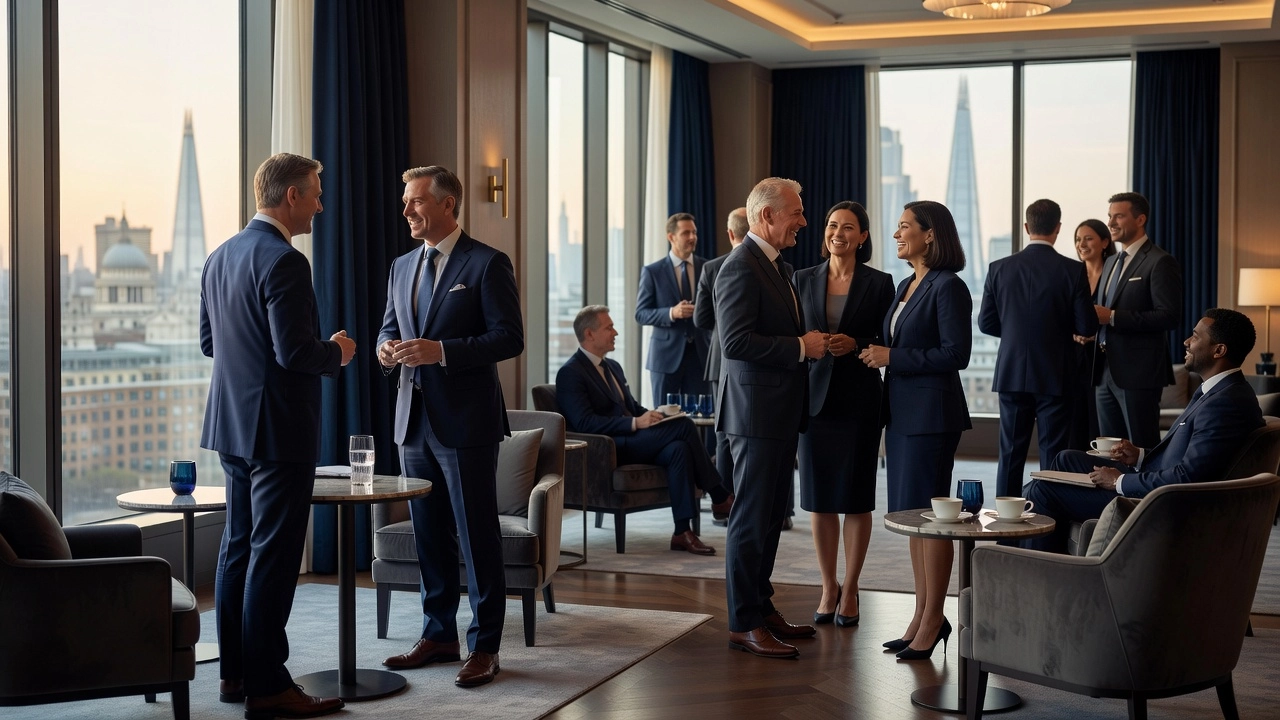
London's professional landscape is fiercely competitive, and the events you host say everything about your brand, your leadership, and your strategic intent. Yet too many senior leaders delegate the planning of networking events in London without fully understanding what separates a forgettable evening from a genuinely career-defining gathering.
The city offers extraordinary venues, a deep talent pool, and a diverse professional community that few global capitals can match. But these advantages mean nothing without a clear framework for execution. From venue selection and attendee curation to timing, format, and post-event follow-through, every decision carries weight at this level.
This guide is built specifically for senior leaders who want to move beyond the basics. Whether you are launching a new initiative, deepening existing relationships, or positioning your organisation within a key industry vertical, you will find actionable insight here. Each point has been chosen to address the real friction points that derail even well-resourced events. Read on to ensure your next professional gathering delivers the connections, credibility, and commercial value it should.
Why London Is Uniquely Suited to Senior Business Networking
London occupies a distinctive position in the global business landscape. As one of the world's two most important financial centres alongside New York, the city concentrates an unusually high density of founders, C-suite leaders and senior decision-makers across finance, technology, professional services, creative industries and beyond. That concentration creates a natural gravitational pull; senior professionals are already here, which makes attendance at London-based networking events considerably lower-friction than travelling to alternative European cities.
With 177 business conferences scheduled in London in 2026 alone, the city's events calendar is both competitive and instructive. That volume signals something more significant than busy diaries: it reflects where senior professionals collectively expect to do business. For founders, membership organisations and leadership communities, choosing London as an event location aligns immediately with that expectation.
Accessibility reinforces the city's practical case. Served by multiple major airports and positioned in a time zone that overlaps with both Asian morning sessions and North American afternoons, London functions as a natural anchor for multinational gatherings. International guests travelling from the Gulf, Asia-Pacific or North America can reach the city with relative ease, which matters considerably when delegate travel is central to the programme.
The city's venue landscape adds further range. From historic livery halls such as Guildhall and Mansion House to private members' clubs, contemporary hotel spaces and riverside boardrooms, event designers have genuine choice across formality, scale and atmosphere, allowing programmes to be matched carefully to audience and purpose.
For membership organisations and professional communities, the prestige of a London address carries real weight among senior audiences, particularly when hosting international guests at flagship annual events. That reputational context is difficult to replicate elsewhere.
The Shift From Attending to Hosting: A More Valuable Approach
Most coverage of networking events in London is written from the attendee's perspective: where to go, when to register, which open-door events are worth your time. For founders, CEOs and senior leadership teams, however, this framing misses the more strategically valuable question entirely. The higher-value model is not finding the right event to attend; it is designing and hosting a curated private experience where you control every meaningful variable.
When you attend an open-registration event, your outcomes depend on who else happened to register, the format the organiser chose, and the energy of a room you had no hand in shaping. Hosting inverts that equation completely. You define the guest list, the conversation agenda, the environment and the pace. The difference in outcome quality is not marginal; it is structural.
This shift is already well underway at the senior level. As BizBash has reported, the events industry is experiencing a strategic reorientation in which networking has displaced content as the primary draw for business event attendance. Separately, research on CEO time allocation highlights growing scepticism about volume-based conference attendance, with senior leaders increasingly asking whether each event genuinely serves a defined strategic purpose.
For membership organisations and professional communities, the case is equally compelling. Well-designed hosted events directly influence member retention, deepen engagement and strengthen perceived value, making them a commercial investment as much as a relational one. A thoughtfully curated private gathering signals to members that their community is substantive, selective and worth belonging to.
PURE ONE Business works with leadership teams and membership organisations to design precisely these kinds of outcomes-focused hosted experiences, where the guest list, format and environment are all shaped around specific commercial or strategic goals.
What Distinguishes a Well-Designed Networking Event From a Generic One
The most reliable indicator of a networking event's quality is no longer how many people turned up. According to the EventsAir State of Events 2026 report, drawing on insights from more than 380 event planning professionals worldwide, delegate experience and feedback now rival attendance figures as primary measures of success. For London organisers competing in one of the world's most densely populated professional events landscapes, this shift carries real consequences. A gathering of 200 people that leaves most attendees feeling their evening was wasted is, by any meaningful measure, a worse outcome than a smaller, deliberately designed event from which people leave with genuine connections and a clear sense of value.
Effective design begins with a stated purpose, defined before a venue is selected or an invitation is drafted. Whether the objective is deepening relationships within an existing leadership cohort, introducing new voices into a professional community, generating pipeline conversations or rewarding a network, that clarity shapes every subsequent decision. Without it, the guest list, format and running order become arbitrary, and the event defaults to the kind of generic experience that senior professionals have learned to deprioritise.
Programme structure is where most events either succeed or fail. The balance between facilitated conversation, informal time, curated content and shared experience determines whether delegates leave with real relationships or simply a pocket full of business cards. In-person events consistently deliver stronger networking quality than virtual alternatives precisely because they allow unscripted, real-time interaction; protecting informal time within the programme is as important as any formal element.
Guest curation, pre-event communication and the physical environment each contribute to whether attendees feel the occasion merited their time, a consideration that carries particular weight for founders and senior leaders managing competing demands. A thoughtfully curated room, where the right balance of familiar and new voices is in place, can do more for a community than any amount of production value. Personalisation across event design is now rated as extremely or very impactful by nearly two-thirds of professional planners, and that principle applies as much to pre-event briefings and introductions as it does to on-the-day experience.
The most memorable networking events combine a strong sense of occasion with an atmosphere relaxed enough for honest, exploratory conversation. That balance is not produced by a premium venue alone; it requires deliberate design thinking, where the emotional register of the event is decided first and every logistical detail is built to support it.
How to Justify a Networking Event to Budget-Conscious Stakeholders
Budget scrutiny is one of the defining pressures facing event teams in 2026. Research from the events industry consistently confirms that most planning teams are operating under tight financial constraints, with little expectation of significant relief. In this environment, any networking event that requires organisational sign-off needs a structured, credible ROI narrative, not simply a compelling venue or a strong agenda.
The commercial case rests on three measurable dimensions. Relationship depth captures how meaningfully attendees connect, moving the conversation beyond headcount to the quality of conversations and the follow-up activity they generate. Pipeline value tracks commercial conversations initiated or advanced as a direct result of the event. Community strength reflects longer-term returns: retention within a professional network, increased engagement and the reputational signal that well-run events send to members, clients and prospective partners. Presenting these three dimensions clearly in a budget submission gives decision-makers concrete outcomes to evaluate, rather than abstract promises.
The most effective reframe is positional. When a networking event is presented as an investment in relationship infrastructure rather than a line item under discretionary spend, the question shifts from whether to invest to how to invest deliberately and well. As event strategists note heading into 2026, the most impactful programmes are those designed around continuous engagement, not isolated occasions.
The human capital argument carries particular weight at senior level. Research widely cited across HR and professional development sources suggests that approximately 85% of professional roles are filled through networking. In a market like London, where senior talent acquisition is both competitive and costly, the environments in which relationships form carry computable value.
Working with an experienced event partner also strengthens the internal business case materially. When programme outcomes are clearly scoped, supplier relationships are established and logistical risks are mitigated, cost becomes considerably easier to defend. PURE ONE Business supports clients through precisely this process, helping decision-makers present a coherent, outcome-led case for investment from the outset.
Formats That Work for Leadership Teams and Member Communities
Not all event formats serve leadership audiences equally well. Choosing the right structure is as important as choosing the right venue, and the most effective organisers are increasingly deliberate about matching format to purpose.
1. Private Dinners and Hosted Suppers
A well-curated private dinner remains one of the most powerful formats available for senior-level networking. The intimacy of a carefully chosen table, typically no more than twelve to sixteen guests, removes the noise and formality of larger conference settings and encourages the kind of candid, substantive conversation that genuinely advances professional relationships. Operated under Chatham House rules, with precision guest curation and no-pitch expectations set in advance, these evenings create conditions for trust to develop quickly. What begins as a single dinner can, over time, seed a sustained peer community, as the iterative growth of executive forum dinners in sectors such as construction and built environment clearly demonstrates.
2. Executive Roundtables
Where private dinners prioritise relationship depth, executive roundtables prioritise intellectual exchange. A small group of peers convening around a structured but open discussion generates dialogue of measurably higher quality than panel sessions or keynote formats. For the host organisation, running a well-designed roundtable positions it as a genuine thought leader rather than simply a convenor of contacts.
3. Recurring Event Calendars
A single flagship event, however well executed, cannot sustain community engagement on its own. Membership organisations and professional networks that combine an annual gathering with regular smaller touchpoints, such as roundtable breakfasts, networking evenings or themed workshops, build the consistent presence and accumulated trust that one-off events cannot replicate.
4. Multi-Day and Residential Formats
Residential conferences and executive retreats allow participants to move beyond transactional introductions into genuine relationship-building. Shared experiences across two or three days, whether in the UK or at a European destination, generate professional bonds that persist long after the programme ends. International residential forums, such as those held at Villa D'Este on Lake Como, demonstrate how immersive multi-day formats have become a standard design choice for senior membership communities.
5. Hybrid London-Plus-Destination Structures
Combining a core London event with an international destination element extends the value of a single programme investment considerably. A London roundtable dinner in the autumn, followed by a residential retreat in Spain, Italy or France the following spring, serves networking, team development and reward objectives within one coherent programme strategy. PURE ONE Business regularly helps organisations design exactly this kind of connected calendar, ensuring each element builds on the last rather than standing in isolation.
Practical Considerations When Planning a Private Networking Event in London
Translating a well-conceived networking event into a well-executed one requires attention to operational detail that is easy to underestimate until something goes wrong. London's density of venues, suppliers and competing events makes the planning environment demanding, and the margin for error narrows considerably when the guest list includes senior leaders with limited availability and high expectations.
Venue Selection: Prestige, Accessibility and Atmosphere
London's networking geography is meaningfully segmented. Mayfair and St James's carry strong prestige associations for leadership and client gatherings; the City and Canary Wharf suit finance and professional services audiences; Shoreditch and the wider East End align naturally with technology and creative sectors. Choosing a venue in the right postcode signals something about the host before a single guest arrives. Prestige alone is not sufficient, however. A venue that requires awkward evening transport connections or sits outside convenient reach from multiple directions creates friction that undermines goodwill before the programme begins. Atmosphere matters equally: acoustics, layout, lighting and breakout capacity either enable conversation or suppress it. According to The Guide to Business Networking in London, the physical environment directly shapes the connections that hosts are working to facilitate. Premium London venues frequently require lead times of twelve weeks or more, and longer for in-demand locations, so early planning is a practical necessity rather than a preference.
Delegate Logistics and Programme Design
Senior guests expect precision in pre-event communications. Invitations should be clear, timely and personally addressed; RSVP processes should be straightforward; and on-the-day information, including any transport, parking or arrival guidance, should be confirmed well in advance. Diary clashes are common at this level, and a guest who cannot find clear joining instructions is unlikely to persevere. Top 10 Practical Tips for Networking in London notes that London professionals hold responsiveness and clarity to a high standard, an expectation that applies as much to event communications as to any other professional interaction.
Programme design should be treated as a distinct discipline. The full arc of the event, from arrival and first impressions through to the close, deserves deliberate attention. Structured and unstructured time should be balanced carefully; purely open formats can leave attendees uncertain, while over-scheduled programmes can prevent the organic conversation that makes private networking valuable. Equally, how an event ends shapes how it is remembered. A considered close, whether that is a clear call to action, a shared reflection or simply a warm and unhurried departure, leaves a stronger impression than an event that simply dissolves. Top Tips for Making the Most of a Networking Event in London reinforces that this balance between structure and organic flow is one of the most important decisions an organiser makes.
Working With a Specialist Partner
The coordination load across venue sourcing, supplier management, delegate communications and on-the-day delivery is consistently underestimated by internal teams. A specialist partner with established supplier relationships and direct venue knowledge reduces both operational risk and the burden on the host team, allowing leaders to focus on guests rather than logistics.
PURE ONE Business works with founders, CEOs, leadership teams and membership organisations to design and manage private networking events and hosted business experiences across London and carefully selected UK and international destinations, handling the complete programme from concept through to delivery.
Making London Work Harder for Your Business Relationships
London's strategic value as a networking city is only realised when the event itself is designed to match it. The concentration of senior talent, the breadth of distinctive venues and the city's global connectivity create genuine conditions for meaningful professional exchange. But conditions alone do not produce outcomes. The organisations that consistently generate commercial and relational value from networking events in London are those that move beyond passive attendance, take deliberate ownership of the experience and build programmes with clear purpose from the outset.
For senior leaders and member communities in 2026, that means defining objectives before selecting a venue, curating a guest list aligned to those objectives and designing a programme structure that makes valuable conversation possible rather than merely likely. Budget pressure reinforces this discipline rather than undermining it. A well-structured private gathering with thoughtful facilitation and experienced logistical support consistently delivers stronger returns than broader, less-focused public event attendance.
If you are planning a private networking event, a hosted leadership gathering or a member community experience in London or beyond, PURE ONE Business would be glad to discuss how we can help design and manage a programme that genuinely meets your goals.
Conclusion
London's networking landscape rewards leaders who treat events as strategic investments, not administrative tasks. The most impactful gatherings share a common foundation: intentional venue selection that reflects your brand, careful attendee curation that prioritises quality over volume, a format designed to generate genuine conversation, and disciplined follow-through that converts connections into lasting relationships.
Getting these elements right does not happen by accident. It requires senior-level attention, clear objectives, and a willingness to own the details that others overlook.
If you are planning a networking event in London, start by defining the single outcome you want it to produce. Build every decision around that goal. The city will provide the backdrop; your leadership will determine what actually happens in the room.
Plan with purpose, and the results will follow.
About the author
Wesley Baker
Wesley Baker is the Founder and CEO of PURE ONE Group and a travel-industry entrepreneur with more than four decades of experience building and leading businesses across travel, technology and media. Through PURE ONE Business, he helps organisations create distinctive executive retreats, business experiences, meetings, incentives, conferences and events across the UK, Europe and selected international destinations. He is also a bestselling author and regular podcaster.
Related articles

Leadership retreats ·
The New Boardroom Has a View: Why High-Quality Retreats Matter More Than Ever
Why the most valuable business conversations increasingly happen away from the office, and what separates a genuinely high-quality executive retreat from an away day.
By Wesley Baker
Read article
Leadership retreats ·
Executive Retreats Built by Business People, for Business People
Why PURE ONE Business designs executive retreats, leadership experiences and business networking events from a commercial perspective, for CEOs, CFOs, COOs, CMOs, founders and leadership teams.
By Wesley Baker
Read article
Destination intelligence ·
The In-Demand Retreat Destinations for 2027: Spain, Italy and the Balearics
Where business groups are heading in 2027: Spain, Italy and the Balearic Islands lead demand, with Portugal, Greece, Croatia and Morocco close behind.
By Wesley Baker
Read article